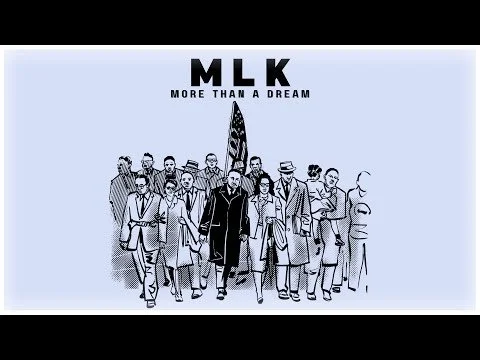
This historically honest song helps young children begin to understand the importance of Dr. King's work and message using simple language and a calm tone that works well for group listening or circle time. This song is designed for:
Preschool classrooms
Kindergarten and early elementary students
Social studies education
Calm reflection or discussion starters
Teachers and caregivers can use this video to support conversations about:
- Inequity (a great vocab word for young learners!)
- Nonviolent resistance
- Civil rights
- Diversity and inclusion
I'd recommend using this song alongside a KWL (Know, Want to Know, Learned) chart so that students may discuss what they've already heard about Dr. King, ask any questions they might have, and finally reflect on what they learned from the song and any other supporting curricular materials. Thank you for sharing this with your students. If this video is helpful in your classroom, feel free to save it for future lessons.
___
In early childhood curriculum, King’s story is often sanitized and he is reduced to a gentle, peaceful man who had a dream. The role that religion played in his life, as well as his anti-war stance and efforts against economic inequality, are seldom addressed directly; omitting these aspects paints a one-dimensional picture of King. Most curricular materials pertaining to King reduces his message to racial equality, but King’s political stance was far more multifaceted than that. I want the children who listen to my song to take away the fact that King’s message was more than just one of unity (this was just the aspect of his message that was palatable to most Americans). The concept of the "dream" overshadows the very brave actions he took to enact change. And all too commonly, we as teachers fail to address perhaps the most important point: all these years later, his dream is still yet to be realized.
I found that, often in early childhood education, curriculum around King—and really everything pertaining to racial tension—shies away from placing the blame where it rightly and truthfully belongs: on white people. I believe we fail our students when we choose not to talk about the role of white people in King’s life, and the fact that the dangers King faced in his life came from white people. Teaching students a sanitized version of history only sets them up for confusion later in life. Simply teaching the aspects of King that fit with white “American” values doesn’t constitute honesty with one’s students.
I wrote this song to teach young students about MLK in an honest yet age-appropriate way. Too often, historical truths are watered down, bent and twisted in the name of making them “age-appropriate” for students when, in reality, we as teachers are shielding students from the real truths of history to avoid conversations that would make us uncomfortable.
I didn’t want my song to contribute to the same sort of "grand narrative" surrounding King that I grew up with and that many children still learn in schools today. I believe this narrative centers whiteness in that it recounts the parts of King’s life with which whites are most comfortable, namely his message of peace and unity.
I sought to bring attention to King’s concrete action steps by highlighting his work as an orator as well as to important historical marches; though the details of these marches are too much to go into in one song and can be supplemented by other means in the classroom, I wanted to lay the groundwork for learning about them and exemplify how King’s followers supported him.
I believe King’s clashes with the U.S. government are usually not brought up in schools because they challenge both American hegemony and the hegemony of standard school knowledge, which usually preaches American exceptionalism as well as pride and trust in the American government. For this reason, I was very intentional with my lyrics, “He went against the government.”
I’ve found in my work with four- and five-year-olds that they are insatiably curious about birth and death, and it’s important to be honest with them about both of these topics. In this song, I tried to provide answers to some of the questions I knew students would have up-front, such as, “Why did he die?”
More than anything, I wanted to make it clear from the outset of my song that the injustices King fought persist today, so that students do not believe that the issues he addressed are solely of the past or ones that have been “solved.” I wanted to work against, to use Chimamanda Ngozi Adichie’s term, the “single story” of a peaceful and nonviolent man that gets told about King; he was angered by injustice, and I believe that students should be taught that so that they feel that their own anger surrounding injustice is valid.